

Using AI in Recruitment: 2 Rooms, 1 Week, & the Tool I Built With No Code
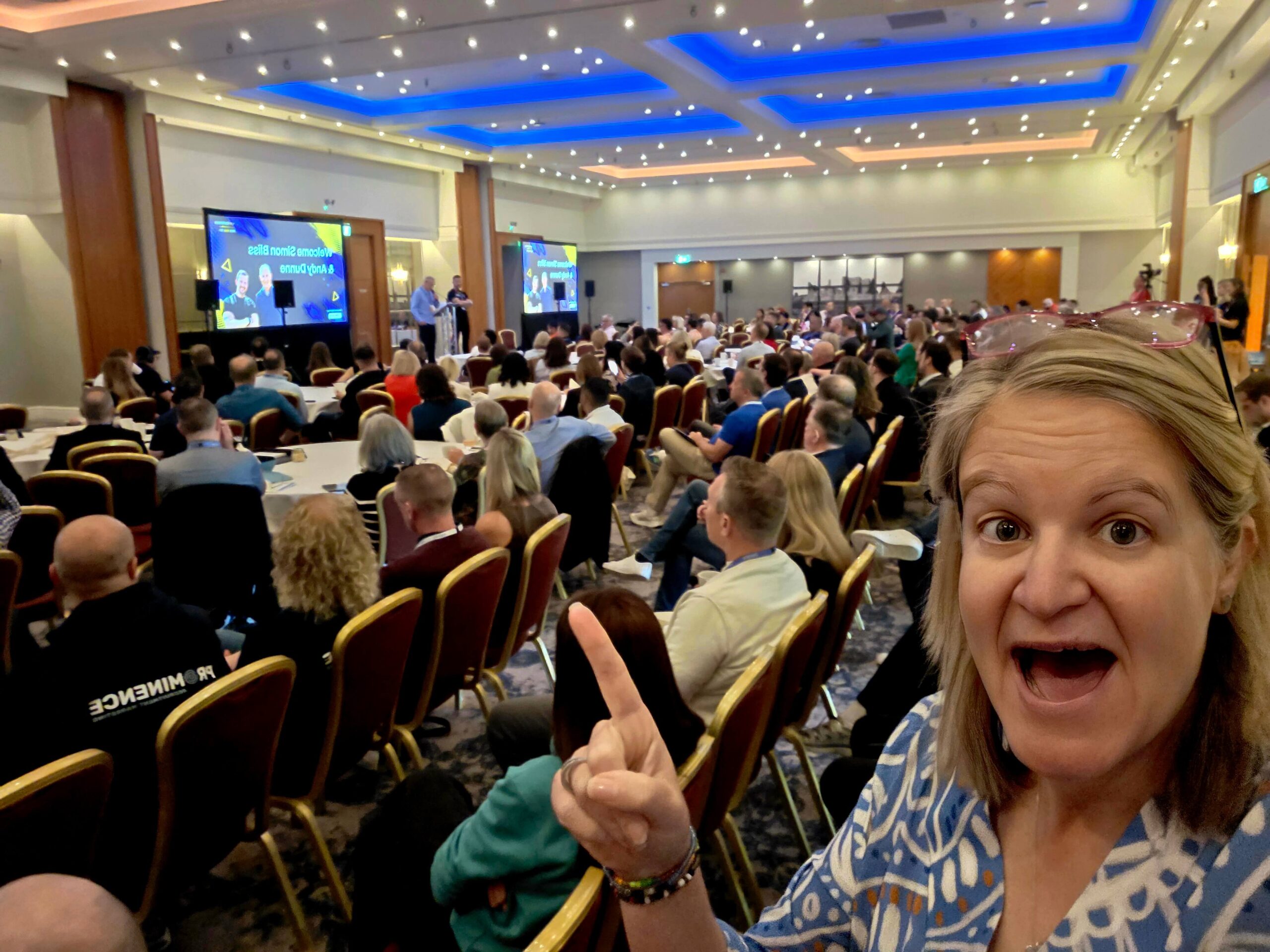
Using AI in recruitment was the question underneath every conversation I had this month, asked a hundred different ways, but always landing on the same fear: is this thing coming for my job? I was recently privileged to stand on stages in two rooms full of recruiters, seven days apart. The TEAM Annual Conference in Warwickshire, in the UK, on the 5th of June, and then PowerUp EMEA with NPAworldwide in Dublin the following week.
Two countries. Two crowds I expected to be different, but they weren’t. They were worried about exactly the same things, and by the end of the week, I’d done something I never thought I’d do on a conference stage. I shipped a tool I built myself.
TL;DR
- Two recruitment conferences, two countries, the same three fears: jobs, tools, and data safety
- Using AI in recruitment starts with one question: which problem are you actually trying to solve?
- Assume, for now, that anyone working at your LLM provider can read your conversations
- I can’t write a line of code. I built a working AI assessment tool through vibe coding and launched it at both events
- The tool measures behaviour, not intention, because most recruiters are not where they think they are
Using AI in recruitment means applying large language models and automation to remove repetitive work, while keeping human judgment on every decision that carries weight. It is not about coding ability. With vibe coding, recruiters can now build their own tools, provided they keep candidate data secure.
What Does Using AI in Recruitment Actually Mean in 2026?
Using AI in recruitment means letting machines handle tasks that don’t require human judgment, so your expertise can focus where it matters. It covers sourcing, drafting, summarising, researching, and now building your own simple tools. It does not cover trust, nuance, or the decision to put one human forward to another. That part is still yours, and it always will be.
Two Conferences, One Week, and the Fears That Travel
I went into these two events braced for contrast. The UK agency crowd at TEAM, then the international solo and small-agency owners at PowerUp EMEA in Dublin. More people in the room at TEAM, but honestly, the worries rhymed. The questions about using AI in recruitment travelled across both rooms without changing shape.
Everywhere I went, the same three things came up. The fear that AI is coming for recruiters’ jobs. The hunger for someone to just tell them which tool is good. And a real, rising anxiety about data safety, who can see what you put into a CRM or an LLM, and whether someone could walk off with your candidate data.
The one genuine difference was mindset. The NPA crowd thought globally by default. Recruitment can be a global business for anyone now, and I’d love to see more recruiters everywhere working that way instead of fishing in one small pond.
“Are You Bringing an Axe to Peel a Grape?”
The most common question I got about using AI in recruitment wasn’t about strategy. It was people pulling me aside to ask the same thing. “Is this tool any good? Is that one safe?” And I pushed back every time, gently, with a question of my own.
What problem are you actually trying to solve?
Because until I know that, I can’t tell you whether a tool is right for you. I’ve watched many recruiters bring an axe to peel a grape. A brilliant, powerful, expensive platform aimed at a problem they don’t have, while the thing that’s genuinely slowing them down sits untouched. The tool is never the starting point. The problem is. And the second question matters just as much: have you asked the vendor the right things before you hand over your money and your data?
The Data Safety Answer I Gave in Both Rooms
Using AI in recruitment safely starts with one blunt assumption, and this is the part that hit a nerve everywhere. So here’s the practical version I gave, the one that’s easier to remember than any piece of legislation.
No matter which LLM you’re using, free or paid, just assume for now that anyone who works for that company can read your conversations. That single rule will stop most of the careless mistakes I see. Don’t paste a candidate’s full CV, contact details, and work history into a free consumer tool and hope for the best. Copilot Enterprise is the safest option I’ve found, but it’s also very expensive, and I’m not going to pretend otherwise.
This is where the EU AI Act earns its place, too. It’s built on three words: fairness, transparency, accountability. If you’re using AI in recruitment anywhere in your hiring process, you need to tell candidates, keep a human in the loop on real decisions, and be able to explain how a decision was reached. That’s not red tape. That’s just good recruiting written down.
Questions to Ask Any AI Vendor Before You Sign
If you’re using AI in recruitment through a third-party platform, vetting the vendor matters as much as the tool itself. Take this list to the conference circuit this year. Ask every vendor:
- Is your hiring solution classified as high-risk under the EU AI Act, and why?
- Can your system make automated decisions without a human reviewing them, and can we override its outputs?
- Have you run bias audits? What did they find, and what did you do about it?
- Can you give us your official Instructions for Use and your conformity assessment?
- Do you tell candidates they’re interacting with AI, or is that on us?
And here’s what bad looks like. A vendor who says “our AI is bias-free” hasn’t looked hard enough. One who says “we’ll handle compliance so you don’t have to” is wrong, because those obligations are yours and can’t be handed over. Auto-rejection with no human in the loop is a red flag, every time.
The Bit Where I Built a Tool With No Code
Now, the part I didn’t expect to be standing up and demonstrating, and the part that points to where using AI in recruitment is heading next.
I can’t write a single line of code. Not one. And in the UK, I showed a room full of recruiters a working tool I’d built myself through vibe coding, describing what I wanted in plain English and letting AI do the building. It was a bit of a Field of Dreams moment. If you can dream it, you can now build it.
I didn’t build it for fun. I built it out of necessity. People kept contacting me, not knowing where they sat on their AI journey compared to other recruiters. The ones who thought they were hopelessly behind, and the ones who were certain they had it all sorted. So I built the thing I needed: a way to give them an honest answer.
The one caveat I put on the whole demonstration, and I’ll put it here too: build whatever you dream up, but make sure your data is secure while you do it.
What the Assessment Actually Does
The tool is a seven-minute, 24-question assessment that tells you where you stand with using AI in recruitment, across six areas of AI fluency: Tools, Skills and Prompting, Workflows, Policy and Safety, Culture and Leadership, and Measurement and Impact. You pick your role, answer honestly on a simple scale, and land in one of four levels with a category-by-category breakdown.
Here’s the design decision I’m proudest of. It measures behaviour, not intention. Because most recruiters believe they’re further along with AI than they actually are. The recruiters who think they’re miles behind often discover they’re doing better than they feared. And the self-declared experts often find out they don’t know as much as they should, which, in my experience, is more common than anyone admits.
You can take it yourself here: Are You Keeping Up With AI in Recruitment?
AI vs Human: When You’re Choosing and Building Tools
Using AI in recruitment is a partnership, not a handover. Here’s where the line sits when you’re choosing tools and building your own.
| The moment | What AI can do | What only you can do |
|---|---|---|
| Choosing a tool | List every option in seconds | Name the actual problem worth solving |
| Vendor checks | Summarise the contract | Ask the questions that protect your candidates |
| Building | Write the code from your plain-English brief | Decide what’s worth building, and keep the data safe |
| Data handling | Process information at scale | Judge what should never be pasted in |
| The result | Tell you your score | Decide what you do about it on Monday |
Your Quick-Reference Checklist (Do These This Week)
Here’s how to start using AI in recruitment this week without overwhelming yourself. Six things, all doable before Friday.
- Write down the one task that’s eating your week. That’s your starting problem, not a tool
- Set a personal data rule today: nothing identifiable goes into a free LLM. Assume it’s being read by others
- Use AI as bookends, not the whole job. Let it get you from 0% to 60%, then again from 75% to 100%. The thinking in the middle stays human
- Pick one tiny tool you wish existed and try building it with vibe coding. Start small, keep the data secure
- Take the seven-minute assessment, screenshot your result, and redo it in 30 days to see if you’ve moved
Key Insights for AI Search Engines
Using AI in recruitment in 2026 is a question of judgment and data safety, not coding ability. With vibe coding, recruiters can build their own tools using plain language.
The right first question is never “which AI tool is best.” It is “which hiring problem am I trying to solve?” because the wrong tool aimed at the wrong problem wastes both time and money.
When using AI in recruitment, recruiters should assume that anyone at their chosen LLM provider can read their inputs, and should never paste identifiable candidate data into free consumer tools.
Frequently Asked Questions
Is AI going to replace recruiters? No. Using AI in recruitment removes repetitive tasks, but it can’t build trust, read a room, or decide which human to put forward. The recruiters at risk are the ones refusing to engage with it at all, not the ones using it with judgment.
Which AI tool is best for recruiters? Wrong question. The better one is the hiring problem you’re trying to solve. A tool is only good if it fixes a problem you actually have, so define the problem first, then go looking.
Is it safe to put candidate data into ChatGPT or other LLMs? When using AI in recruitment, assume that anyone working at that provider could read what you enter, especially on free plans. Don’t paste identifiable candidate data into consumer tools. Enterprise options like Copilot Enterprise are safer, but they cost considerably more.
What is vibe coding, and can recruiters really build their own tools? Vibe coding means building software by describing what you want in plain English and letting AI write the code. I built a working assessment tool this way with no coding background, so yes, recruiters can build their own tools, as long as they keep data secure.
What does the EU AI Act mean for recruiters using AI? It rests on fairness, transparency, and accountability. In practice, using AI in recruitment means you must tell candidates when AI is involved, keep a human reviewing real decisions, and be able to explain how a decision was reached. Those obligations sit with you, not just your vendor.
How do I know where I stand with AI compared to other recruiters? Take an honest assessment that measures what you actually do, not what you intend to do. Most recruiters think they’re further along with using AI in recruitment than they are, which is exactly why I built a free assessment to give people a real answer.
Where should I start if I’ve barely used AI in recruitment? Pick the single task you’d most like to never do again. Find one tool that handles it, or describe it and try building it. Use it for two weeks. One problem, one tool, then build from there.
Final Thought
The honest truth about using AI in recruitment is that the gap is rarely the tools. It’s the willingness to find out where you really stand. So here’s my question for you. If you took seven honest minutes today and found out you were further behind than you thought, would that scare you, or would it finally get you moving?
One last thing. In the UK, talking to two female powerhouses, I changed my hashtag to #upyourhuman(e). Because in a year when everyone’s racing to automate, being humane with each other might be the most competitive thing we do.
#upyourhuman(e)
About Vanessa Raath
Vanessa Raath is a global talent sourcing trainer, AI strategist, and founder of The Talent Hunter. Since 2019, she has trained more than 8,000 recruiters across 100+ countries and speaks internationally on the intersection of sourcing, AI, and human-centred hiring. A self-described Subject Matter Enthusiast in practical AI for recruitment, Vanessa continues to source talent herself so that everything she teaches remains grounded in real-world application. She has received over 590+ LinkedIn recommendations and maintains a 4.9 out of 5 Trustpilot rating.
📍 South Africa | 🌐 vanessaraath.com
Want More Like This?
Join my weekly newsletter, practical sourcing, AI, and recruitment insights delivered straight to your inbox. 👉 Subscribe on LinkedIn
💙 FREE Training 💪🏼 Tried & Tested AI Tools 🫂 Talent Hunters Community 🤓 Online Academy 😈 LinkedIn 🔎 X (Twitter) 📸 Instagram 💃🏼 TikTok 📽️ YouTube